

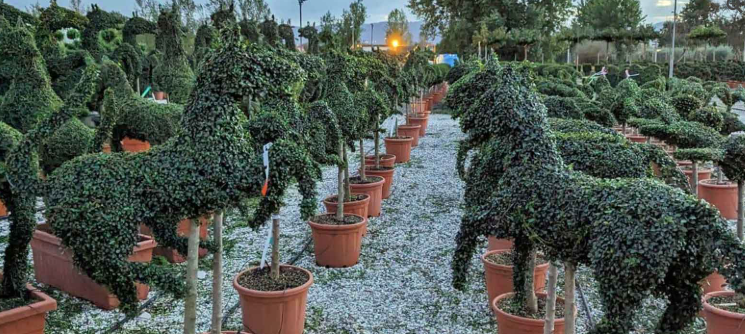
Best Topiary Plants UK: Which Varieties Give Year-Round Structure?
Topiary plants are one of the easiest ways to add instant structure, elegance and kerb appeal to a garden.
But which varieties actually perform well in British conditions?
In this guide, we’ll cover the most reliable evergreen topiary plants, along with practical growing advice.
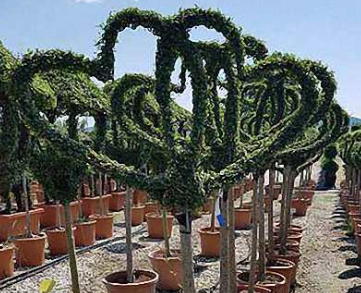
What Makes a Plant Suitable for Topiary?
The best topiary plants share four key traits:
- Dense, compact foliage
- Strong branching structure
- Tolerance of repeated trimming
- Full hardiness in UK winters
Evergreen growth is particularly important, as it keeps entrances, patios and borders looking structured even in mid-winter.
The Best Evergreen Topiary Plants
1. Buxus Microphylla Faulkner (Box Faulkner)
A classic for a reason.
Buxus remains one of the most popular topiary plants in Britain thanks to its:
- Small, dense leaves
- Slow, manageable growth
- Excellent response to shaping
- Suitability for balls, cones and low hedging
- It works beautifully in pots either side of a front door, along pathways, or framing patios.
Expert tip: Trim lightly in late spring and again in late summer to maintain a crisp shape.
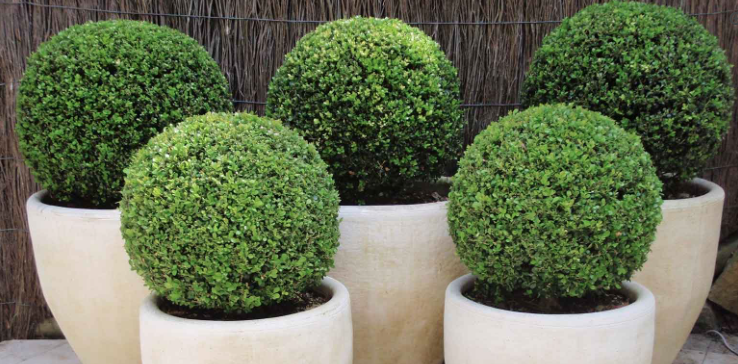
2. Ilex crenata (Japanese Holly)
Ilex Crenata offers a similar fine-leaved appearance with strong resilience.
Why gardeners choose it:
- Compact growth
- Excellent for spheres and pyramids
- Evergreen structure
- Well suited to containers
- It’s ideal for those wanting low-maintenance topiary with year-round reliability.
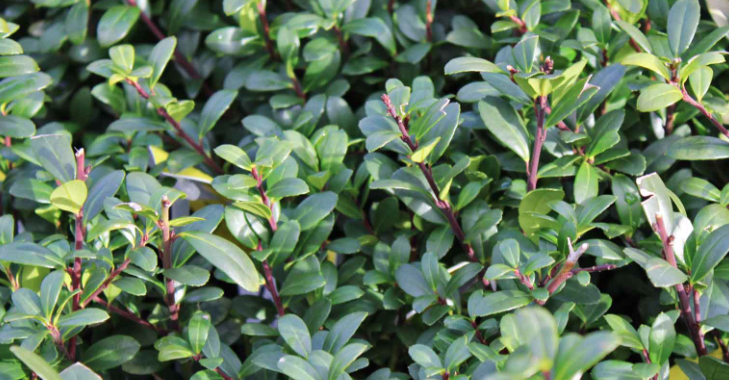
3. Taxus baccata (English Yew)
For larger or more dramatic shapes, Yew is incredibly dependable.
It offers:
- Exceptional hardiness
- Tolerance of heavy pruning
- Long lifespan
- Deep green foliage
- Yew is particularly effective for cones, spirals and statement topiary forms in traditional gardens.
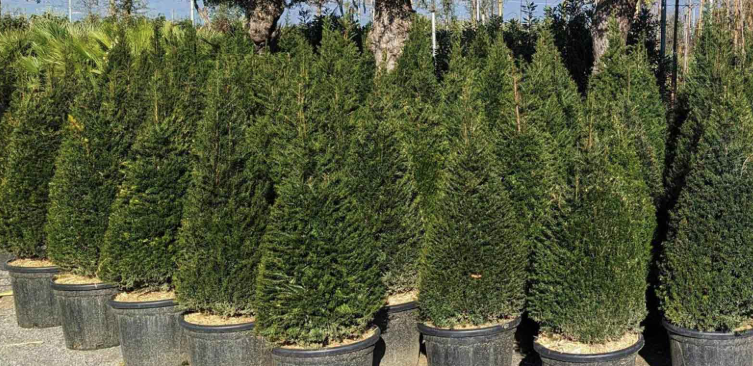
Thuja is a superb choice for taller, structured topiary forms such as cones and columns.
Why it works well in the UK:
- Fully hardy
- Dense, evergreen foliage
- Naturally upright growth habit
- Low maintenance once established
Thuja responds well to light trimming and is ideal for creating height and symmetry in entrances or formal gardens. Its natural column shape makes it particularly suitable for architectural designs where clean lines are important.
It’s also a strong performer in pots, provided drainage is good.
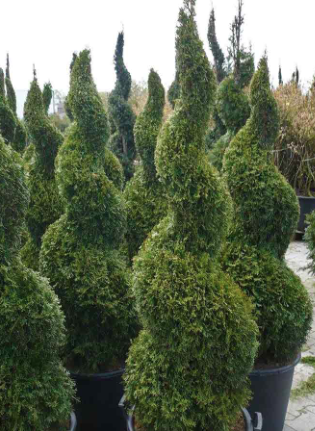
5. Ligustrum jonandrum (Ligustrum Jonandrum)
For faster establishment and a slightly softer evergreen look, Ligustrum Jonandrum is an excellent option.
Key advantages:
- Vigorous growth
- Dense foliage
- Responds well to clipping
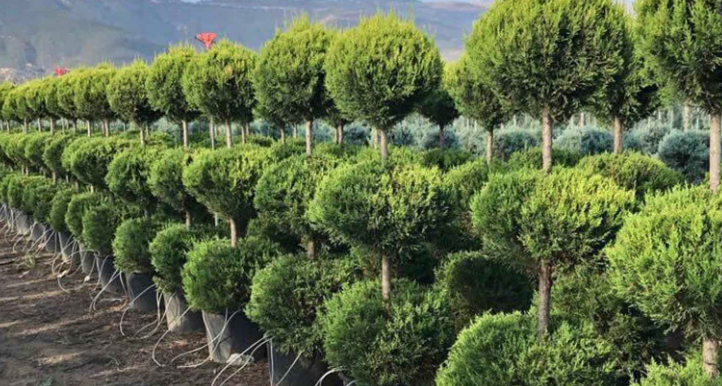
- Suitable for shaping into balls or standards
- Its faster growth rate makes it ideal if you want impact relatively quickly. It’s particularly popular for front-of-house planting and structured borders where evergreen form is needed without the slower growth of Box or Yew.
- Regular trimming will keep it compact and sharply defined.
6. Cupressocyparis leylandii (Leyland Cypress)
Best known as a hedging plant, Leyland Cypress can also be shaped into large-scale topiary forms when maintained correctly.
Why choose it for topiary:
- Extremely hardy
- Fast growing
- Excellent for tall screens or larger cones
- Dense, evergreen coverage
- Because of its vigorous growth, it requires regular trimming to maintain shape — but this also makes it ideal for creating substantial structure relatively quickly.
- Leyland Cypress works particularly well in larger gardens where bold, formal planting is desired.
Are Topiary Plants Suitable for Pots?
Yes – in fact, many topiary plants thrive in containers.
Topiary in pots is ideal for:
- Front door entrances
- Patios and terraces
- Courtyards
- Balconies
- The key is:
- Good drainage
- High-quality compost
- Regular feeding during the growing season
- Avoiding waterlogging in winter
- Container-grown topiary allows flexibility and instant impact, especially in smaller gardens.
How to Keep Topiary Looking Sharp
Topiary maintenance is simpler than many people expect.
Follow these principles:
- Trim little and often rather than heavily
- Shape during mild, dry weather
- Feed in spring to encourage dense regrowth
- Protect pots from prolonged frost
- Regular light pruning encourages thicker foliage and a more defined shape over time.
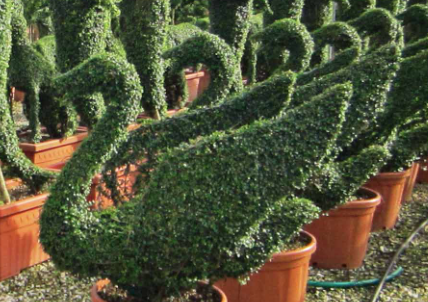
Why Topiary Plants Are a Smart Garden Investment
Unlike seasonal bedding, evergreen topiary:
- Provides permanent structure
- Adds immediate maturity
- Enhances property kerb appeal
- Works in both formal and contemporary gardens
- Even a pair of well-shaped evergreens can transform an entrance or patio space.
If you’re looking for reliable evergreen topiary plants suited to UK conditions, choosing hardy, well-established specimens ensures faster impact and easier maintenance.